
News | Venicegroupservices
Generalities
Prosecco is a typical Italian white wine
It is mainly produced by the Charmat method and has a typical effervescence that is diversified into three types: prosecco tranquillo, prosecco spumante and prosecco frizzante.
ProseccoThe name “prosecco” denotes a DOC (in principle IGT) alcoholic beverage originating in the territory between Veneto (excluding the provinces of Rovigo and Verona) and Friuli Venezia Giulia.
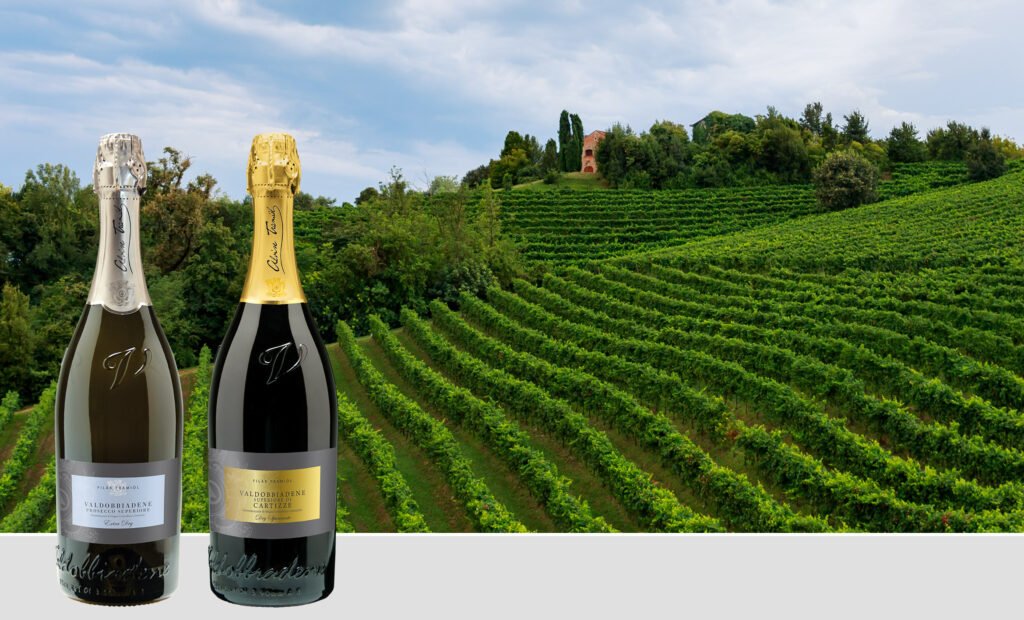
Of all of them, some proseccos are particularly renowned and have achieved the DOCG (DOC Garantita) quality mark; the best known is undoubtedly Prosecco di Conegliano-Valdobbiadene.
Grape varieties
Prosecco is made from white grapes belonging to the vine of the same name (Prosecco to be precise), now better defined as Glera; this designation was introduced in 2009, so as not to confuse vine and wine, better protecting the Prosecco di Conegliano-Valdobbiadene DOCG label.
In fact, those of Glera MUST make up at least 85 percent of the total grapes, while the remaining 15 percent can be made up of chardonnay, pinot grigio, verdiso, bianchetta trevigiana and other strictly regulated grapes.
The Prosecco grape variety is indigenous to Veneto and Friuli Venezia Giulia; it grows luxuriantly in the provinces of Treviso, Belluno, Venice, Padua, Vicenza, Udine, Pordenone, Trieste and Gorizia, in more than 600 municipalities in Veneto and Friuli, respectively.
The Glera vine is vigorous, with large, long clusters; it grows on well-drained soils, thus excluding peat and any extensively irrigated crop.
Prosecco (Glera) has been cultivated for over 200 years and was mentioned (in 1772) in the 8th volume of the “Giornale d’Italia” by the famous academic journalist Francesco Maria Malvolti.
Vinification Method
The technique and art of tasting
Prosecco is the result of the REFERMENTATION in the bottle (or autoclave) of a wine-base produced by vinification with the grapes mentioned above.
The term identifying the production method (of many types of prosecco, as well as other sparkling wines) is Charmat, named after the Frenchman who patented it; in fact, the discoverer of this system was the Italian (Piedmontese) Martinotti.
The Charmat method is ideal for the production of prosecco, as it is a wine that bases its characteristics on IMMEDIATE, primary pleasantness rather than complexity.
It is therefore a method by which the characteristics of those aromatic grape varieties that express freshness, intense aromas and vibrant acidity are preserved intact.
The prosecco production technique is quite simple, but it differs according to the type one wants to obtain; let us see it in more detail.
Harvesting of the wine-base
Harvesting of the wine-base takes place early to ensure freshness, acidity and fragrance.
Destemming-that is, the separation of the grape berries from the (tannin-rich) stems-is as important as the subsequent absence of skin maceration.

Fermentation of the must takes place by the addition of selected yeasts and inside large steel tanks lined with a cavity (to maintain the temperature at 18-22°C)
The process continues until, in the must, alcohol and sugar remain constant (two consecutive measurements, between morning and evening).
Charmat method
This is followed by racking to remove the lees and maturation to remove the tartrates; bottling, if immediate, would result in a “still” prosecco. On the other hand, in most cases (about 80 percent), prosecco is started in the process of the oft-mentioned Charmat method.
Let’s see what this is all about: when the wine-base is ready it is placed in special autoclaves (possibly together with sugar and certain selected yeasts).
About 24g of sucrose per liter produces up to 6 atmospheres of pressure and a relative ADDITIONAL alcohol content of about 1.5°.
Foaming takes place in these autoclaves, which continues for about 15 days at a temperature of 13°C; stopping is achieved early for sweeter sparkling wines and late for drier ones.
Then isobaric racking (i.e., without dispersing carbon dioxide) takes place to separate the lees; after which refrigeration is carried out to stabilize the wine and finally isobaric bottling.
Nutritional Characteristics
Prosecco is an alcoholic beverage that falls into the fermented group. Its chemical composition (when fermentation is complete) does NOT exalt large amounts of sugars, let alone protein and fat; it is therefore deducible that ALL of prosecco’s energy intake comes from its ethyl alcohol content (about 12°).
Like wine and highly alcoholic beers, prosecco can also be consumed daily, as long as the portions are NOT more than two and do not exceed 125ml at a time.
Potentially harmful to the body
Similar to other alcoholic and superalcoholic beverages, immoderate consumption of prosecco is also potentially harmful to the body, especially in the presence of overweight, hypertension, hypertriglyceridemia, and liver distress.
In addition, alcohol abuse is closely associated with degeneration of the esophageal, gastric and duodenal mucosa, with increased acidity, reflux and the chances of onset of gastritis or, worse, ulcer.
Finally, remember that prosecco does NOT boast the same contribution in antioxidants (such as the famous resveratrol) as red wine, which is why its dietary intake confers no nutritional value

The Venice six districts
Unraveling the Enigma: Exploring Venices Six Sestieri and Their

Balsamic vinegar factory
News | Venicegroupservices Special Lunch and Balsamic Vinegar Factory

Rijeka
News | Venicegroupservices Rijeka Vacation: A Hidden Gem
