
News | Venicegroupservices
Venice to see
What to see in Venice
Jewish ghetto
It will seem to be inside a matryoshka, because the Ghetto of Venice is “a city within a city”, out of the tourist chaos, a mystical atmosphere surrounds it.
With 5 synagogues and a museum, it is the oldest Jewish ghetto in Europe.
Continuing towards the city center, you can admire Venice by getting lost in its streets.
For example, taking Strada Nova, you’ll reach the Rialto Bridge, the oldest and most famous bridge in Venice.
Rialto
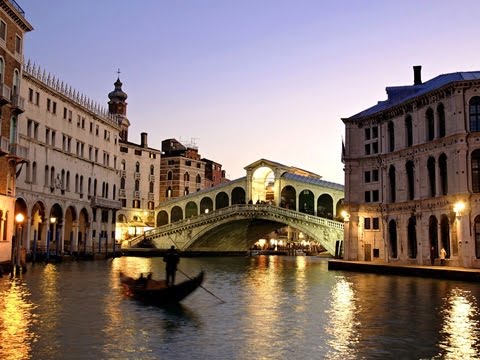
The Rialto Bridge is one of the bridges that characterize the city.
Suffice it to say that there are more than 400 of them! But it is one of the most unforgettable, for its architecture and its history.
It was built between 1588 and 1591 by the architect Antonio da Ponte.
Today, covered by arches, it represents one of the most famous photographic points in the world.
Moreover, crossing it, you have the possibility to reach the Rialto Market, a market whose origins date back to 1097.
San Marco: Basilica and Bell Tower
From here a few minutes walk, you can reach the heart of the city, Piazza San Marco.
It was built in the ninth century, 180 meters long, 70 wide, is the only square in Venice.
It is the center of the city and one of the most fascinating squares in the world, so much so that Napoleon called it “the most beautiful salon in Europe”.
Here you will find unmissable buildings on your trip to discover what to see in Venice in two days: St. Mark’s Basilica, the Campanile, the Doge’s Palace and the Clock Tower.
Venice to see
Basilica of San Marco
The Basilica is the most important temple of Venice.
Its original construction began in 828, next to the Doge’s Palace as it was to house the relics of St. Mark.
The Basilica, characterized by a Latin cross plan and five domes, became the city’s cathedral in 1807.
St. Mark’s bell tower dates back to the ninth century and is one of the most important symbols of the city, along with the basilica and square of the same name.
Called “El parón de casa” by the Venetians, it is one of the tallest bell towers in Italy.
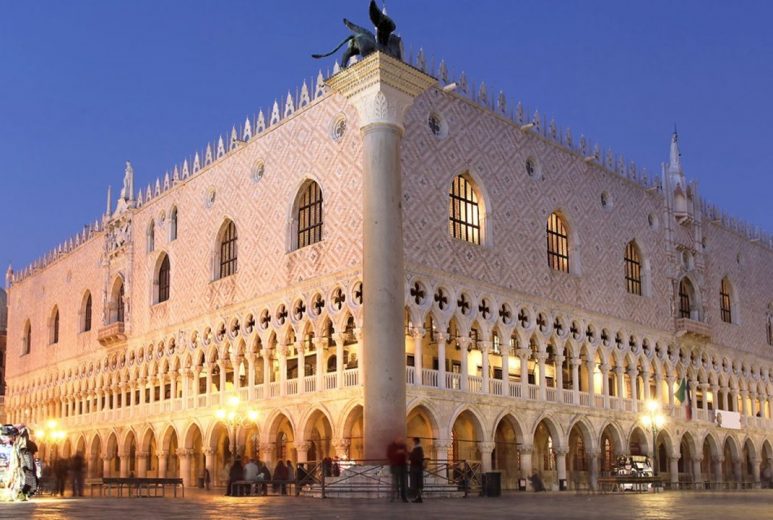 Palazzo Ducale
Formerly also called “Doge’s Palace” as it was the seat of the doge, it is one of the symbols of the city of Venice.
In the ninth century, the palace was a fortified castle.
Unlike the Doge’s Palace, which is recognized as an institutional building, almost all the palaces in Venice are identified with the name of the family that built them or left its mark on them. Often, two or more families who subsequently owned the building are mentioned in the name, for example Palazzo Cavalli-Franchetti.
Other buildings maintain the traditional denomination of Ca’ that indicated the belonging of the building to a specific family.
Venice hosts many palaces: Ca’ Farsetti and Ca’ Loredan, municipal offices, Ca’ Foscari, university seat, and Ca’ Rezzonico, museum.
Murano and Burano
Burano
The first islands, thanks to the Venetian craft, have remained populous and active over time.
What to see in Venice, if not the master craftsmen at work?
On the other hand, the art of glass blowing, famous throughout the world, is a millennial art, with techniques that are handed down from generation to generation.
Torcello
The island of Torcello, although the most populated of the Republic of Venice until the fifteenth century, today has little more than a dozen inhabitants.
Due to a contagion of malaria that decimated the population, the island had a progressive decline.
Torcello is fundamental as it allows to trace the origins of Venice, because you can admire one of the oldest religious complexes in Europe, the Basilica of Santa Maria dell’Assunta.
Founded in 639, it preserves the wonderful Byzantine mosaic of the XII-XIII century.
Sant’Erasmo
Another island not to be missed is the island of Sant’Erasmo, the second largest after Venice in the Venetian Lagoon.
Reachable in half an hour by vaporetto, since the sixteenth century this green island has been, and still is, the vegetable garden of Venice.
As mentioned before, one of the best ways to visit Venice is to get lost among its calli.
Fascinating is Strada Nova, an important pedestrian street of Venice overlooked by many churches and palaces.
Equally fascinating is the classic gondola ride, the characteristic Venetian boat, passing under the bridges set in the city, like a real period film.
For the greedy
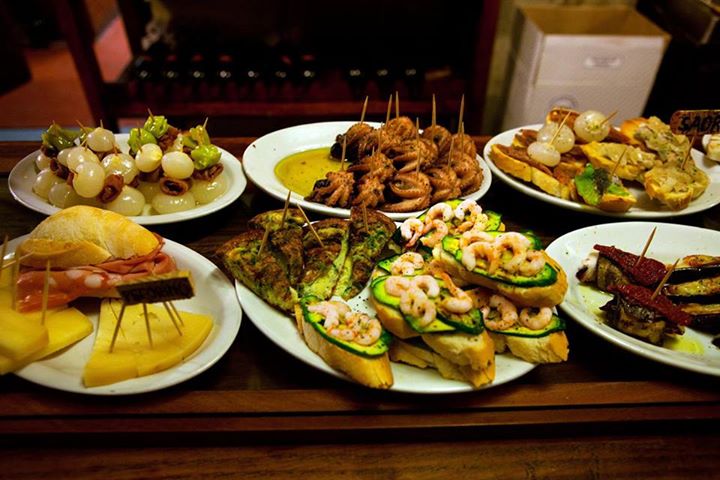
In Venice, a tour of the bacari is an absolute must.
The bacari are traditional Venetian taverns where you can enjoy “un’ombra de vin” or the typical spritz, accompanied by excellent “cicchetti”, local appetizers, ranging from meat to fish.
Venetian cuisine is rich in tasty dishes.
Mostly seafood-based, representative dishes of the local cuisine include risi e bisi, known elsewhere as risotto with peas, sarde in saor, baccalà mantecato and bigoli in salsa.
It is also worth trying the famous “impàde” a long cookie, made of sugar, eggs and almond paste, to be eaten at the Jewish Ghetto.
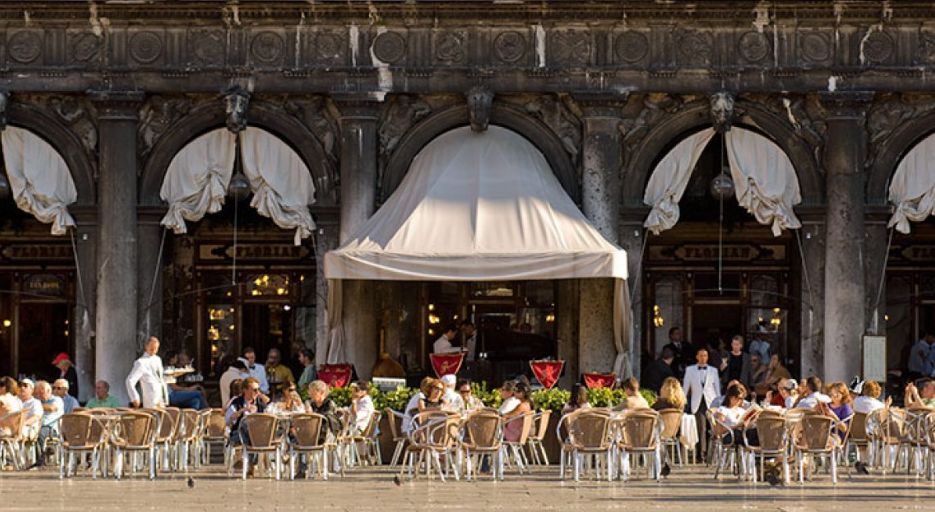
A visit to the historical cafes is a must.
When talking about historical Italian cafes, it is impossible not to mention Venice, in fact, thanks to its position and its commercial relations, in the Venetian city was born the tradition of coffee, later spread to the rest of Italy.
Among these, one of the most famous is undoubtedly Florian coffee, dated 1720 and symbol of the city.
For art lovers, an unmissable stop is the Accademia Gallery.
It houses the richest collection of Venetian and Veneto paintings, from the Byzantine and Gothic 14th century to the artists of the Renaissance.
Bellini, Titian, Giorgione, Tintoretto are just some of the great artists in the works that the gallery holds.
One of Leonardo da Vinci’s highlights, the Vitruvian Man, however, is rarely exhibited.
Don’t miss the Peggy Guggenheim museum,
Italy’s most important museum for 20th century European and American art, created by the heiress who gave it its name.
The museum is located in Palazzo Venier on the Grand Canal, and houses masterpieces by artists Pollock, de Chirico, Picasso, Kandinsky and others.

The Venice six districts
Unraveling the Enigma: Exploring Venices Six Sestieri and Their

Balsamic vinegar factory
News | Venicegroupservices Special Lunch and Balsamic Vinegar Factory

Rijeka
News | Venicegroupservices Rijeka Vacation: A Hidden Gem
