
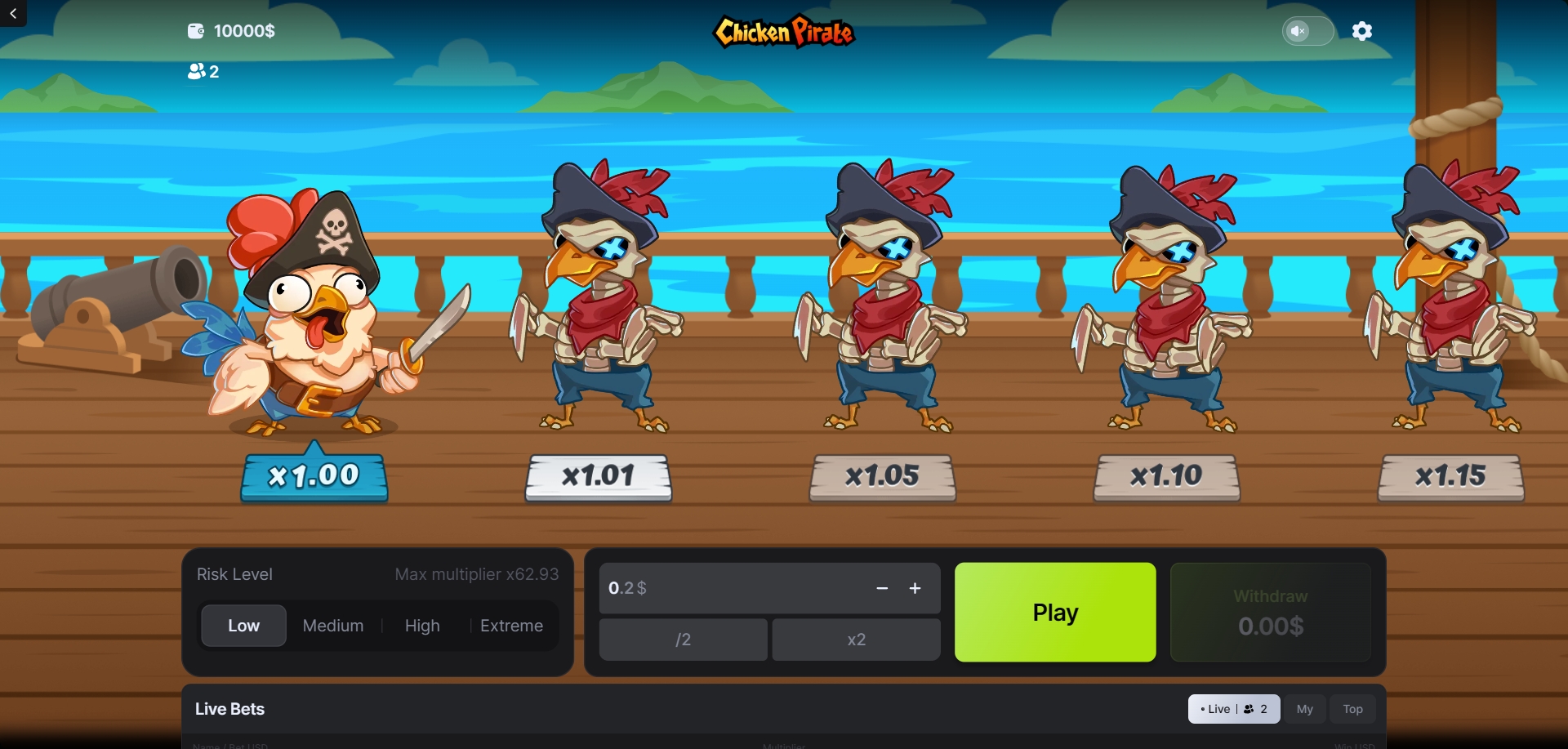
The Chicken Crossing Game is a individual casino game that focuses on a chicken crossing a busy road and gathering prizes along the way. Players put down a stake, watch the chicken move forward, and receive payouts based on the symbols it lands on or the distance it travels before stopping. Because the game is structured around symbol values and multipliers rather than traditional reels, the payout table is the key reference point for anyone who wishes to understand how much each result is worth. This article describes the payout structure in detail, examining every symbol category, the ways combinations form, the role of special features, and the practical steps needed to calculate winnings on any given spin.
Lower-tier symbols and the returns
The most basic tier of symbols in the Chicken Cross Game consists of four primary icons that show up most regularly. These symbols award between 0.2 and 1 times the stake when they arrive as the final stopping point. Even though the separate returns are low, they happen often enough to sustain the balance moving during extended sessions. The paytable shows each of these symbols in ascending order so players can see at a glance which one provides the best return among the low-tier group. Because these symbols occupy the majority of steps on the path, they also affect the overall hit frequency. A player who studies the distribution can calculate how many spins are expected to end on a low-tier symbol and adjust expectations as needed.
Reviewing updates to game symbol values
Game developers sometimes release updated versions of the Chicken Cross Game that change symbol multipliers or add new features. When an update takes place, the paytable is updated to reflect the new values. Players can confirm they are viewing the current payout information by checking the version number or last-updated date listed in the information panel. If the figures vary from previous sessions, the new values apply immediately. Keeping track of these changes ensures that payout expectations remain correct throughout the life of the game.
Scatter symbols and their role in payouts
Scatter symbols in the Chicken Cross Game do not must land on a certain line. Instead, three+ scatters that occur during a single game trigger a bonus feature and award a separate scatter prize. The paytable indicates the scatter multiplier value as a multiple of the total wager, separate from the chicken’s final landing spot. This indicates a player can get a scatter win even if the main path finishes on a lower symbol. The specific number of scatters required and the matching multipliers are displayed clearly in the information panel, allowing players to figure out the combined return from both the path finish and the scatter reward in a single round.
Free spin rounds and multiplier stacking
Getting the necessary number of scatter symbols gives a set number of free spins. During these spins the chicken travels along a separate path where extra multipliers are accumulated. Each multiplier symbol landed is added to a running total that relates to the ultimate payout of the free-spin sequence. The paytable shows the number of free spins awarded and the variety of multipliers that can show up. Because the multipliers stack, a individual free-spin round can yield totals far larger than any solitary base-game stop. Players who want to maximize returns from free spins should take note of the maximum multiplier cap specified in the rules, as this determines the upper limit of what the bonus round can award.
Variance and its impact on symbol payouts
Volatility describes how frequently the Chicken Cross Game pays out and how substantial those payouts usually are. A higher-volatility setting signifies that the low-tier symbols show up often while the high-tier symbols and bonus triggers are less common, resulting in longer stretches with no significant returns. A less volatile setting allocates payouts more uniformly across all symbol tiers. The game information panel usually displays the volatility level, allowing players to match their chosen risk profile with the payout pattern. Comprehending volatility assists clarify why two players with the same stake can encounter very different session outcomes although the symbol values remain identical.
Wild icons and swap mechanics
Wild icons stand in for any regular symbol except the scatter. When a wild lands on the path, it fills the position and assumes the value of the symbol it substitutes. The paytable reveals whether the wild carries its own multiplier or merely duplicates the underlying symbol. In some versions the wild also grows to cover an extra step, raising the chance of reaching a more lucrative position. Because wilds can transform a moderate stopping point into a premium one, their frequency and placement rules are important details for anyone examining symbol payout values. The game rules section explains specifically which symbols the wild can replace and whether multiple wilds can combine on the same path.
RTP percentage described
The RTP (RTP) percentage reveals how much of the total money wagered on the Chicken Cross Game is projected to be returned to players over a long period. Typical RTP figures for this style of game vary between 95 percent and 97 percent, although the exact value for any specific version is stated in the game rules. Because the RTP is calculated across millions of rounds, short sessions can vary significantly from the theoretical figure. The payout table works together with the RTP to show how individual symbol values contribute to the overall return. Players who want to assess different games can use the stated RTP as one objective measure alongside the symbol payout list.
Understanding the core payout grid
Each Chicken Cross Game round commences with the player selecting a stake amount. The game then shows a grid or path that the chicken takes, and each step is signified by a symbol. Low-paying symbols usually depict everyday objects such as traffic cones or coins, while high-paying symbols feature larger vehicles or special items. The payout grid enumerates each symbol together with the amount it pays when it occurs in a winning line or when the chicken lands on that step. Because the game uses fixed symbol values rather than paylines that run across multiple reels, the payout for any result is simply the stake times the listed multiplier for the symbol or combination reached. Checking the in-game paytable before starting is the only reliable way to confirm the exact figures, since different versions may modify the numbers slightly.
Maximum win limits and how they are reached
Most versions of the Chicken Cross Game establish a maximum win cap, often expressed as a multiple of the stake or as a specific sum. The paytable specifies this cap and describes which combinations or bonus rounds can attain it. Achieving the maximum often necessitates getting the top-paying icon on the last stage alongside the maximum multiplier from a free-spin round. Since the cap exists to maintain the game’s mathematical balance, rounds that would surpass the cap are capped to the stated maximum. Gamers who review the paytable can determine precisely which symbol and multiplier configurations yield the highest reward and can structure their gaming duration accordingly.
How to interpret the paytable before starting
Before starting a round, a gambler should access the paytable screen and observe the multiplier for each symbol tier, the scatter requirements, the wild behaviour, and the maximum win cap. The paytable is reachable from a clearly marked button on the main game screen. After the values are comprehended, the player can pick a stake that matches the session budget and risk preference. Because the payout values are fixed for the duration of the round, there is no need to change any other settings after the stake is picked. Taking thirty seconds to review the paytable eliminates uncertainty about what each possible stopping position is worth.
Typical misconceptions concerning symbol values
Some players think that higher stakes always boost the likelihood of landing premium symbols, but the random number generator processes every stake level equally. Some think that symbols close to the end of the path are more probable to deliver higher amounts, yet each step is set independently. The paytable remains the sole authoritative source for payout values, and zero pattern or timing influences the outcome. Recognising these facts enables players focus on bankroll management as opposed to attempting to anticipate symbol frequency through observation alone.
Sequential round flow and payout calculation
Each Chicken Cross Game round adheres to the same procedure. The player sets the stake, presses the start button, and watches the chicken move along the path. When the chicken halts, the game identifies the symbol at that position and any scatter or wild symbols that showed up. The payout is then determined by multiplying the stake by the listed value for the stopping symbol, adding any scatter award, and applying any accumulated multipliers from free spins. The result appears on screen together with a breakdown of each component. Repeating this process over many rounds enables players to verify that the payouts match the figures shown in the paytable.
Middle-level symbols and their returns
Mid-tier symbols sit between the everyday objects and the high-value icons. They typically depict items such as speed-limit signs, small trucks, or crates of eggs. When the chicken halts on one of these symbols, the reward goes from 1.5 to 5 times the stake. The payout table shows them with both a single-symbol value and any combo bonuses that may be applicable if two or more appear in sequence. Because mid-tier symbols show up less often than the bottom tier, each occurrence contributes a perceptible boost to the session total. Players who strive for steady growth rather than rare jackpots often notice that getting several middle-level stops in a row produces the most reliable results over time.
Wager range and bet-to-payout ratio
The Chicken Cross Game accepts stakes from a lowest of a few pence up to several pounds per round, although the exact limits are set by the operator hosting the title. The payout values shown in the paytable are always displayed as multiples of the current stake, so changing the bet size adjusts every return proportionally. A player who selects a higher stake therefore sees larger absolute payouts when the same symbol combination appears. The game interface shows the current stake vancouversun.com clearly and refreshes the potential win amount in real time, enabling players to confirm the relationship between stake and payout before confirming the round. Checking the on-screen bet selector is the fastest way to see the available range on any given site.
Practical tips for applying payout information
Gamers who wish to make educated judgments can keep a basic log of the icons that appear during a play period and match the outcomes with the paytable figures. This record does not affect future results but gives a more precise view of how often each level appears in real play. Defining a loss threshold before beginning and modifying the wager only when the round balance varies by a fixed amount are two additional measures that apply the payout data sensibly. Because the Chicken Cross Game is a standalone game rather than a complete casino site, these options remain inside the game screen and do not involve site-wide bonuses or account settings.
Top-level symbols and associated returns
The top regular symbols in the Chicken Cross Game feature large vehicles and golden objects. These symbols pay between 10 and 50 times the stake when the chicken stops on them. The paytable presents them at the top of the symbol list and may include additional notes about any extra multipliers that activate when two high-tier symbols appear consecutively. Because these symbols are the main source of larger single-round wins outside the bonus features, their frequency directly affects the game’s volatility. A player who wants to understand the risk level can compare the listed high-tier values with the published RTP figure to gauge how much of the return comes from these premium stops.
